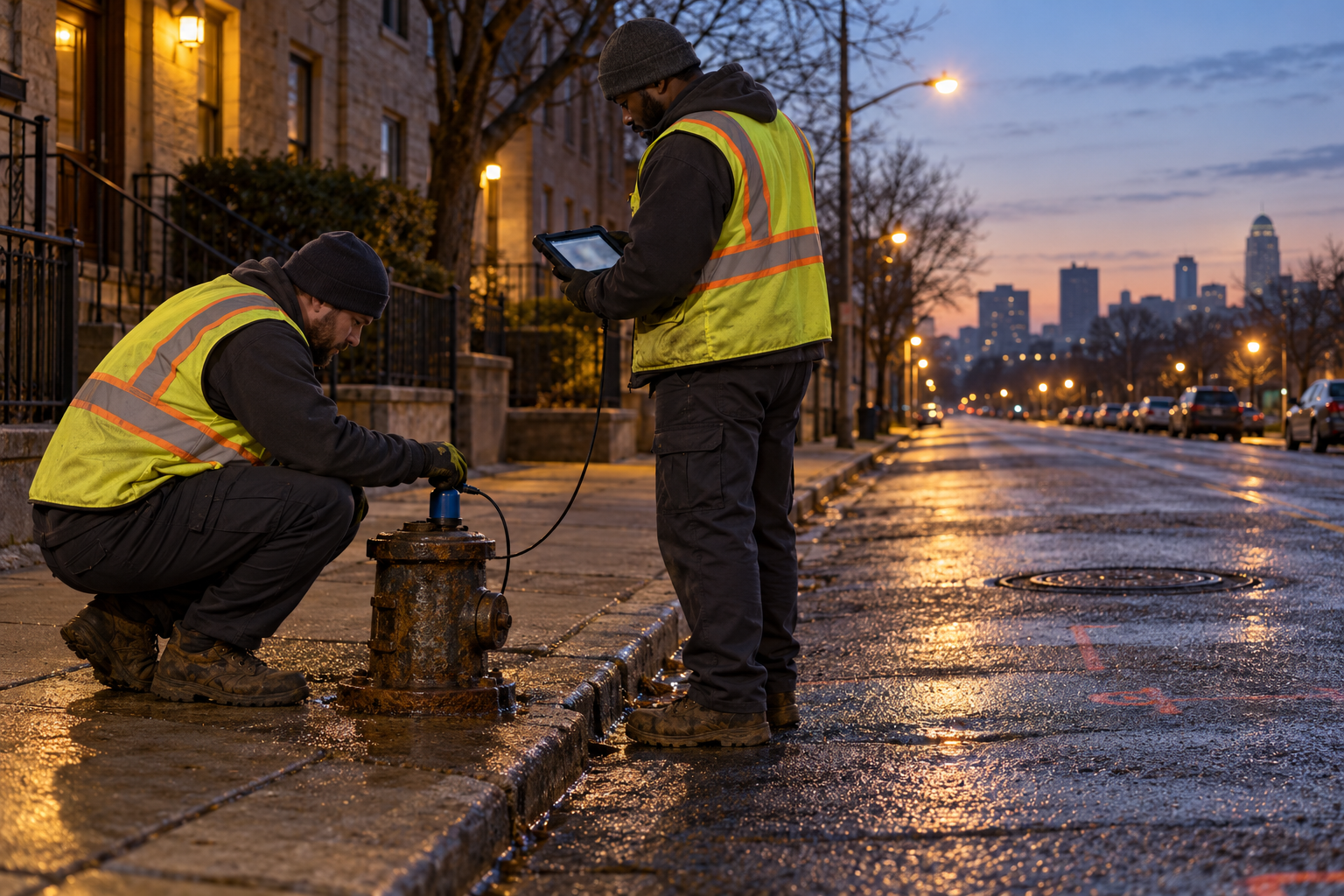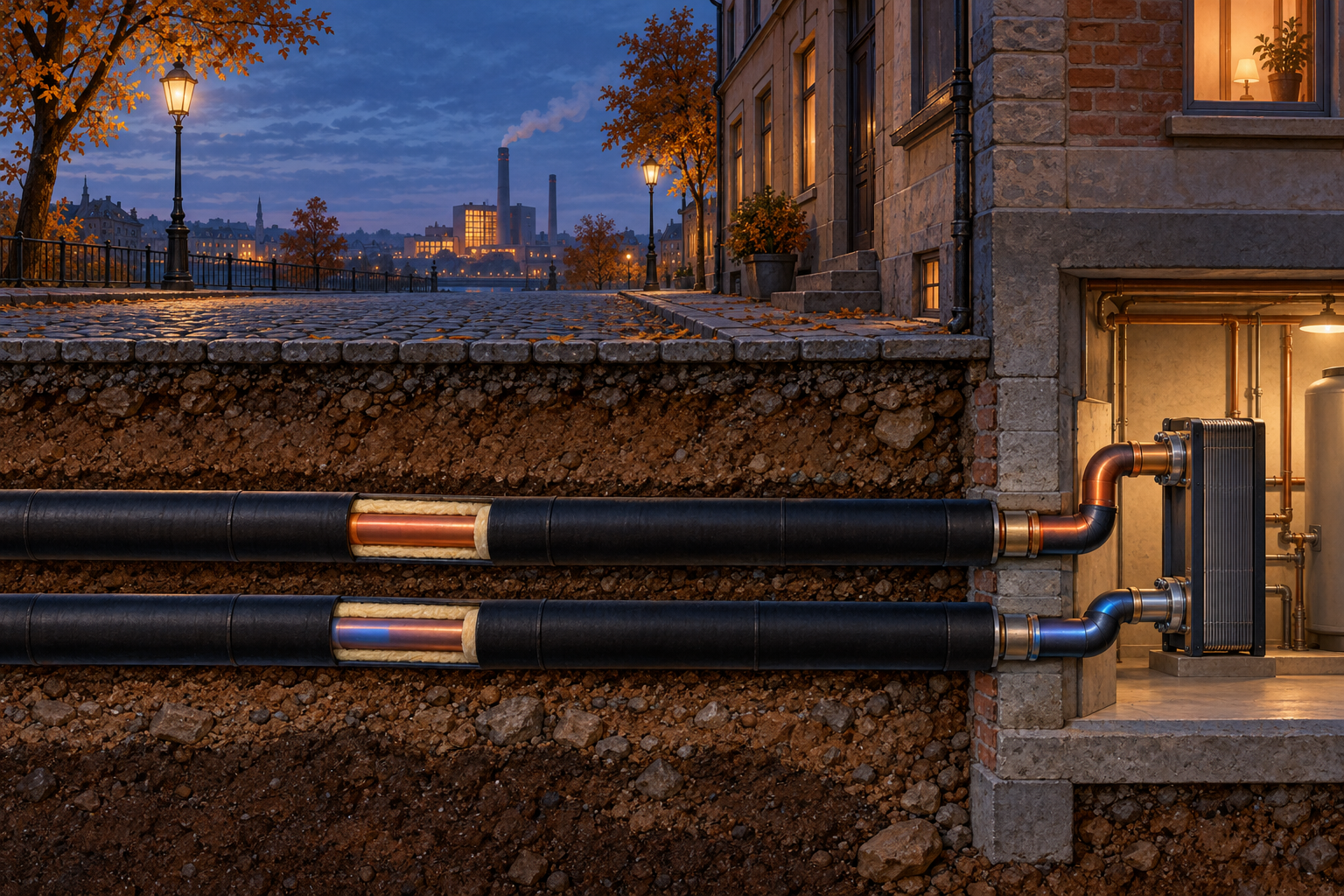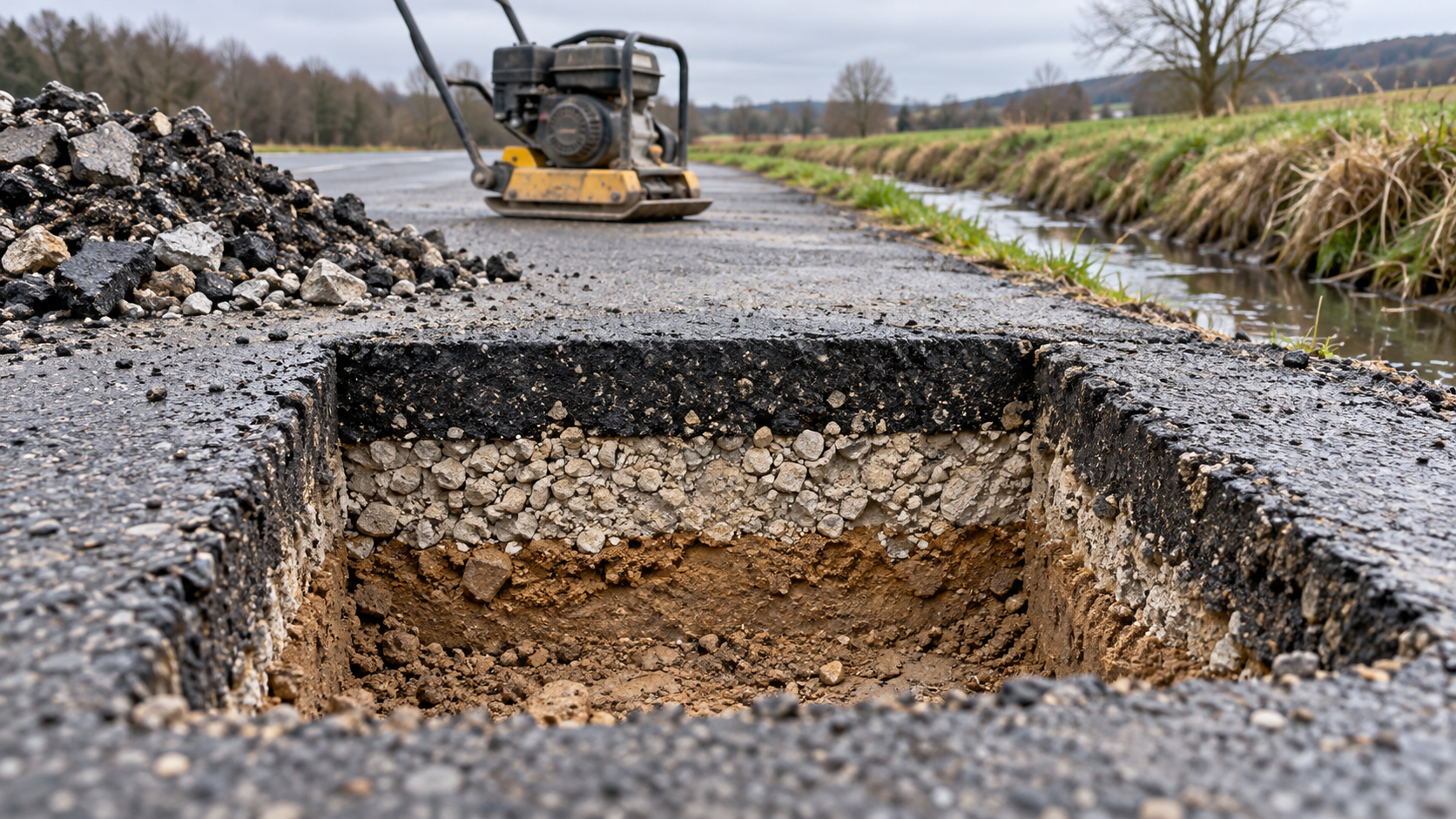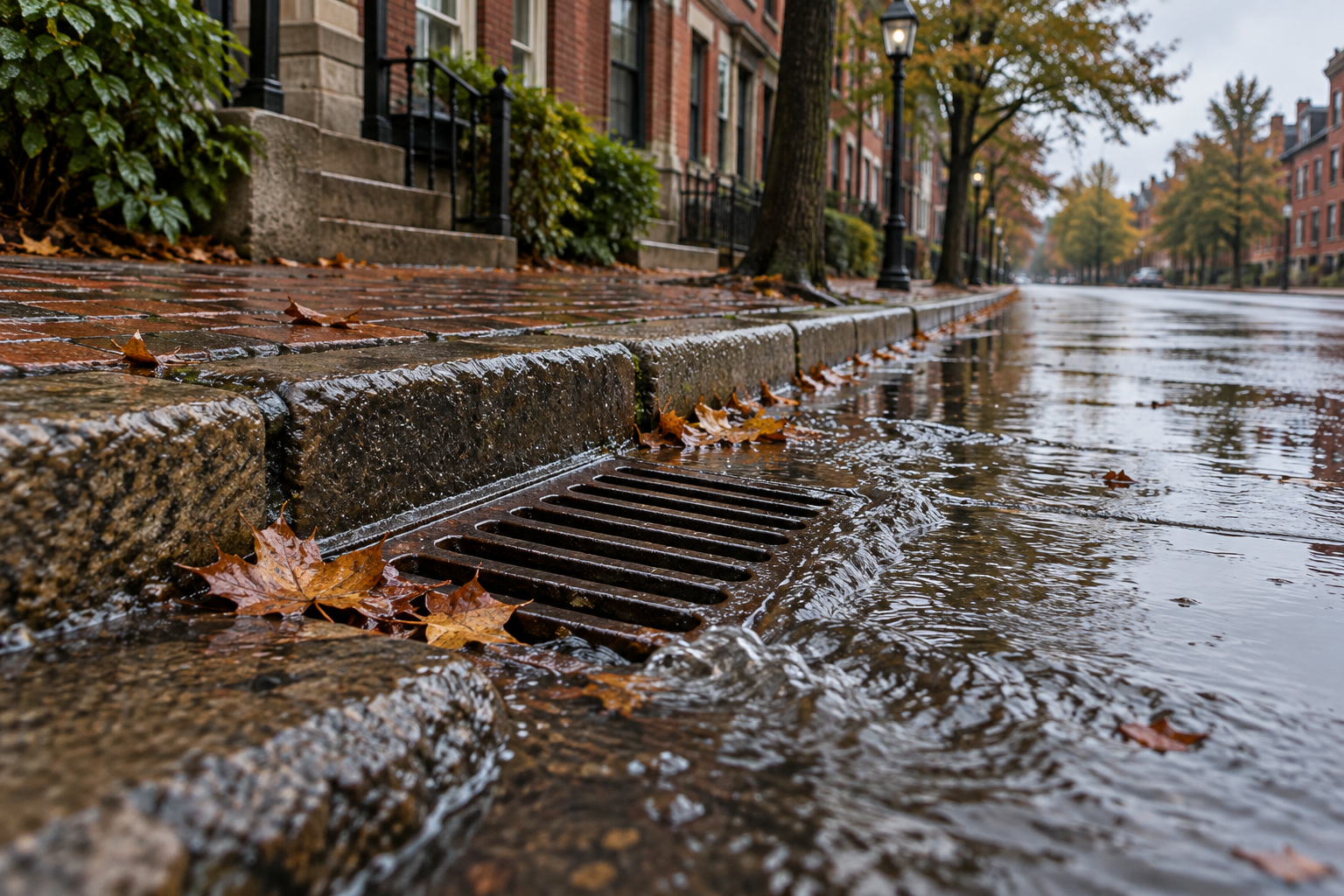
Rain finds the low edge of a street. It runs beside the curb, slips through a grate, and disappears. From the pavement, the journey looks simple. Beneath the grate it may be anything but. In one neighborhood the water enters a storm pipe that leads toward a creek. In another it joins wastewater from sinks and toilets in a combined sewer headed toward a treatment plant. Both arrangements exist within the same city. The U.S. Environmental Protection Agency's 2004 report on sewer overflows describes these different routes, and the distinction determines what a hard rain can send to the waterway.
First the water has to reach the pipe. Pavement gives rain little opportunity to soak into soil, and curbs collect it into a quick flow. The speed is measurable, though it varies by place. In a U.S. Geological Survey study of urban watersheds in Hampton Roads, Virginia, commercial catchments had higher storm-runoff yields, runoff ratios, and peak flows than the monitored residential catchments. Their streams also rose quickly after rainfall. The researchers linked much of the pattern to impervious cover and the short path from surface to drainage system, while cautioning that other local factors may contribute. A grate takes in water from a particular catchment, not an abstract “average storm.”
Two routes beneath the grate
In a separately sewered area, household wastewater travels in sanitary pipes toward treatment. Street runoff travels in a different network of drains, channels, and pipes, often directly to a waterbody. That keeps ordinary runoff out of the sewage-treatment flow, but it does not make the runoff clean. The EPA report identifies sediment, vehicle-related metals and oil, nutrients, and microbes among pollutants urban rain can carry from pavement and other surfaces. The first important question about a storm pipe is therefore where it discharges and what has washed into it on the way.
A combined sewer makes a different trade. In dry weather, it carries household wastewater to treatment. When rain enters, the same pipe must convey both flows. If the wet-weather volume outruns the capacity of pipes or treatment works, a designed overflow point can release a mixture of rainwater and untreated sewage to a river. That release is a combined sewer overflow, or CSO. It is a consequence of a particular sewer design under excess flow, not a description of every drain that runs fast in a storm. The EPA report notes that even outfalls within one combined system can overflow at different frequencies.
Washington, D.C., gives the distinction a street-level scale. About one-third of the District has combined sewers, according to DC Water's fall 2024 overflow report. Its dry-weather flow goes to the Blue Plains treatment plant; some excess combined flow in rain can discharge to the Anacostia or Potomac rivers or Rock Creek. The report also records a change already made underground: during the two days of heavy rain from Tropical Storm Debby in August 2024, the Anacostia River Tunnel system kept more than 100 million gallons of combined flow from discharging into the river. DC Water reports that captured flow is conveyed to Blue Plains for treatment. The number belongs to that storm and that tunnel system, not to every heavy-rain day in the city.
An overflow at a river and a puddle on a street are different signs. A release through a combined-sewer outfall may relieve pressure while the street above remains passable. Water pooling on a street may reflect an inlet, a local pipe, surface grading, or downstream capacity without proving that sewage has overflowed into a river. A 2020 New York City infrastructure assessment manual treats street flooding, sewer surcharge, backups, CSO volumes, and direct stormwater pollutant loads as separate effects to examine when drainage changes. One photograph of a flooded corner cannot establish which failure occurred below it.
Where cities make room for rain
There are decisions before the inlet, inside the pipe network, and at the receiving water. Keeping some runoff on the surface long enough to infiltrate or evaporate can reduce the volume entering a combined sewer. An eight-year USGS study at RecoveryPark in Detroit measured how newly built swales changed flows to the local combined system. The researchers estimated that the green infrastructure initially kept at least 2.4 million gallons a year out of those pipes. Then gravel drains were excavated to address slow infiltration and standing water; the shortcut routed water back toward the sewer, and much of the volume benefit disappeared. The result is a useful warning about design in clay-rich ground: a rain garden is a hydraulic connection whose outlet and underlying soil matter as much as its planting.
Storage works at a different point. A large tunnel can receive combined flow when smaller pipes are under pressure, then send it onward for treatment when capacity is available. DC Water's capital plan adopted in March 2025 describes its Rock Creek work as a mix of green infrastructure to manage runoff from 92 impervious acres and a planned 4.2-million-gallon storage tunnel for the Piney Branch overflow. One measure reduces what reaches the sewer; the other holds some of what still arrives. The plan is a proposed design and budget, not proof that either component performs exactly as projected after construction.
Separating a combined sewer into two networks removes sewage from the stormwater route, but it can shift the problem if the runoff itself is ignored. The EPA report warns that a newly separate storm sewer may still deliver substantial pollution to receiving waters, and that stormwater controls may remain necessary. The decision is not simply whether to build another pipe. It is how much rain to retain, how much flow to store or treat, and what quality of water leaves the system at each outlet.
The grate on a rainy street is the visible opening of that larger arrangement. Its performance matters, but so do the pavement draining toward it, the branch of sewer it enters, and the capacity waiting downstream. To understand where the rain goes, trace the route beyond the curb—to the treatment plant, the storage tunnel, or the receiving water.
A thought worth keeping?